
Solutions · Energy and zero-carbon parks
Communications-Grade Photovoltaic Energy Services
Rooftop and agri-PV, with monitoring, shutdown, and operations
 Illustration
Summary
BCNE treats a PV plant as a digital energy system, not only a rack of modules: survey, load checks, PVSYST design, interconnection support, EPC, and monitored operations.
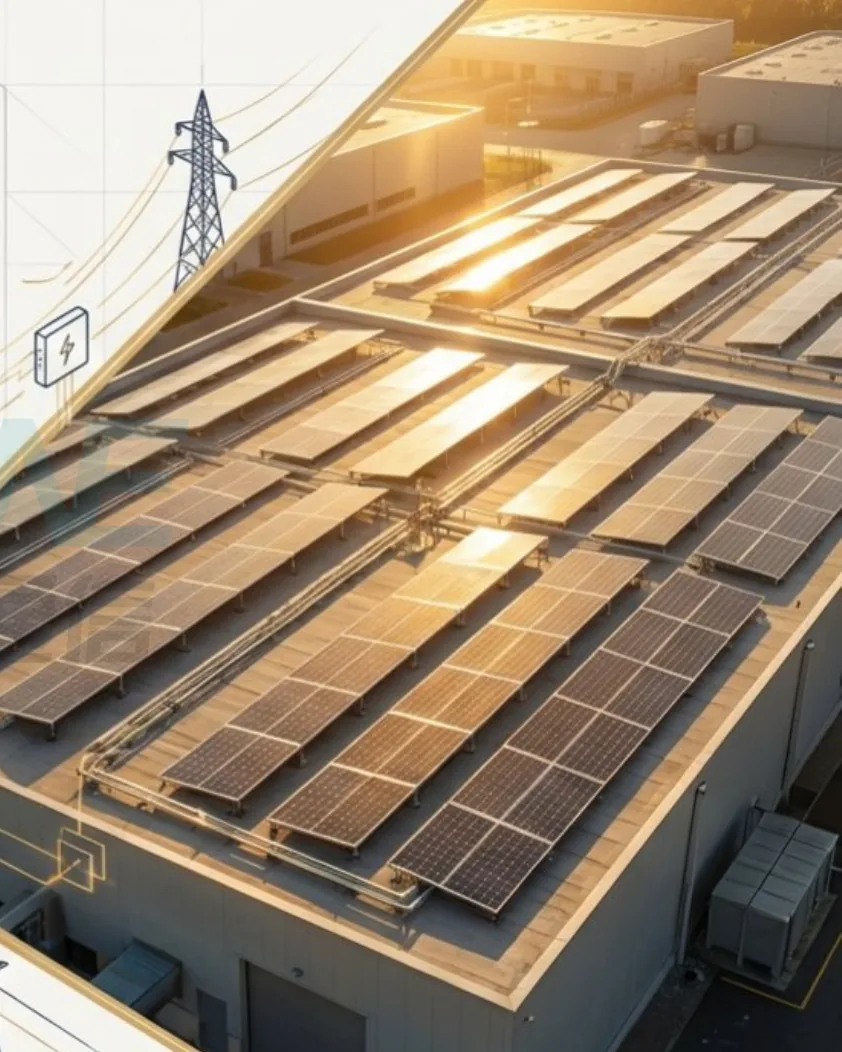
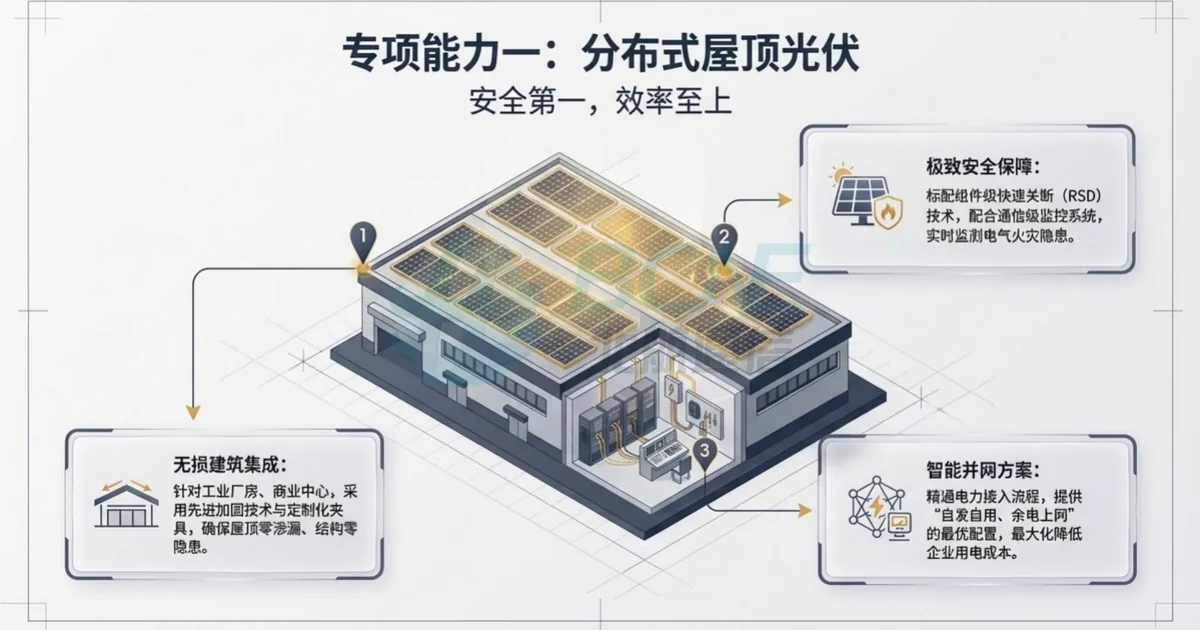
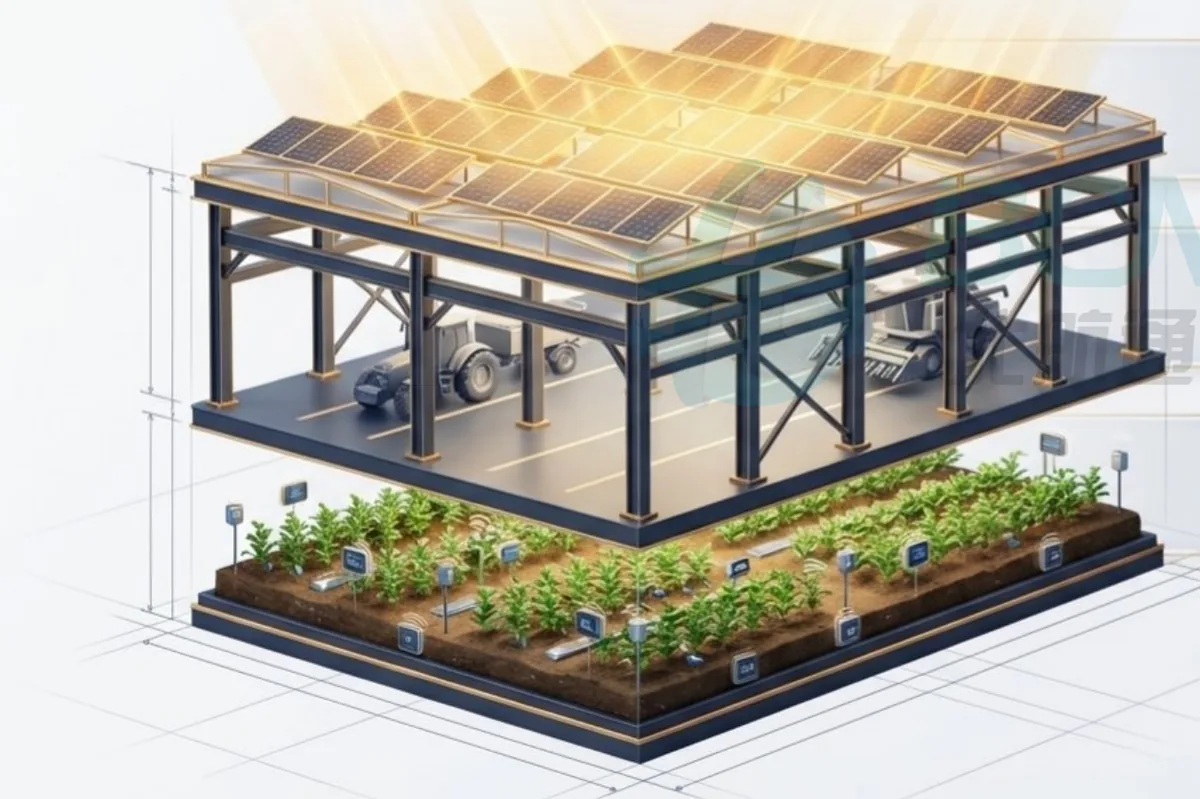
Safety thinking includes module-level rapid shutdown (RSD) and electrical-fire monitoring on rooftop jobs, with earthing, lightning protection, and interference control approached with the same discipline as communications work. Rooftop jobs on plants and commercial buildings attend to structure and waterproofing. Interconnection is discussed as self-consumption with export of surplus. In agri-PV, 3D shading studies address competition for light, foundations are chosen to protect the plough layer, and high, wide structures leave room for machinery. Arrays can be linked to farm sensors, shade, irrigation, and lighting. This page does not promise a generation yield, and does not publish conflicting staff or fleet numbers.
 Illustration
Where It Fits
- Industrial or commercial rooftops where fire and structure matter as much as kWh
- Businesses considering self-consumption with export of surplus, and needing interconnection support
- Agri-PV sites that must keep farm operations moving under the array
- Owners who want remote monitoring and alarms on an operating plant
Technical Highlights
- Full lifecycle: survey, structural load check, PVSYST, interconnection filings, EPC, smart O&M
- Safety: module-level RSD; NB-IoT fire-hazard monitoring, described as a standard approach
- Roof work: fixing and clamps aimed at lowering leak and structural risk (not an absolute guarantee)
 Illustration
- Agri-PV: 3D light modelling; pile foundations that protect the plough layer; high, wide structures for machinery; optional link to 60+ farm sensors and the farm platform
- Monitoring and fault warnings (the brief uses “millisecond” language; contractual metrics follow the contract)
- Operating life described as “more than 25 years,” which should be read as a design and O&M objective
- “50% lower labour cost and more than 15% higher yield” appears only as a target for agri-PV plus farm automation, not as a generation guarantee
 Illustration
How We Deliver
- 01ConsultationSite, scale, purpose and budget
- 02Site SurveyEngineers visit and check conditions
- 03Proposal & QuoteA practical plan and a clear quotation
- 04Build / DevelopDelivered to plan with regular progress updates
- 05CommissioningJoint testing, document handover, training
- 06Operation SupportContinued maintenance after handover
FAQ
What electrical licence do you hold for PV work?
The company holds Class-4 permits for installation, repair, and testing of electrical installations. See the Facts page. Other contractor grades follow the certificates.
Can you guarantee a dry roof or a set number of generating hours?
Not on the website. Those terms belong in a contract.
Will an agri-PV array steal light from the crop?
The brief uses 3D shading studies and a high structure so machinery can still pass. A planting plan is needed early.
Is interconnection support included?
Interconnection is listed in the lifecycle. Rules and the applicant of record vary by grid company.
Can plant monitoring connect to our energy system?
The brief emphasises digital monitoring.
What does fire IoT have to do with PV?
The brief applies fire-monitoring practice to module-level warnings.
How do we get the full capability pack?
Download the Web PDF, or request the high-resolution file. info@bcne.com.cn, +86-22-58695656.
Download
The web version downloads directly. For the high-resolution version, please leave your name, phone and email first — the download starts right after you submit.
Ask About This Solution
Fields marked * are required. We reply within 1 working day.
✔ We reply to every inquiry within 1 working day.
This page introduces a solution and is not an offer. BCNE is not affiliated with Beihang University.