
Solutions · Energy and zero-carbon parks
The Digital Nervous System of a Zero-Carbon Park
PV, energy and carbon, IoT, and park operations in one system
 Illustration
Summary
A zero-carbon park often already has PV, meters, and software that do not talk to one another. This brief positions BCNE as the “digital nervous system”: a communications-grade IoT layer that connects PV, buildings, agriculture, and safety devices; an energy-and-carbon brain that can see and dispatch loads; and a work-order loop that closes inspections.
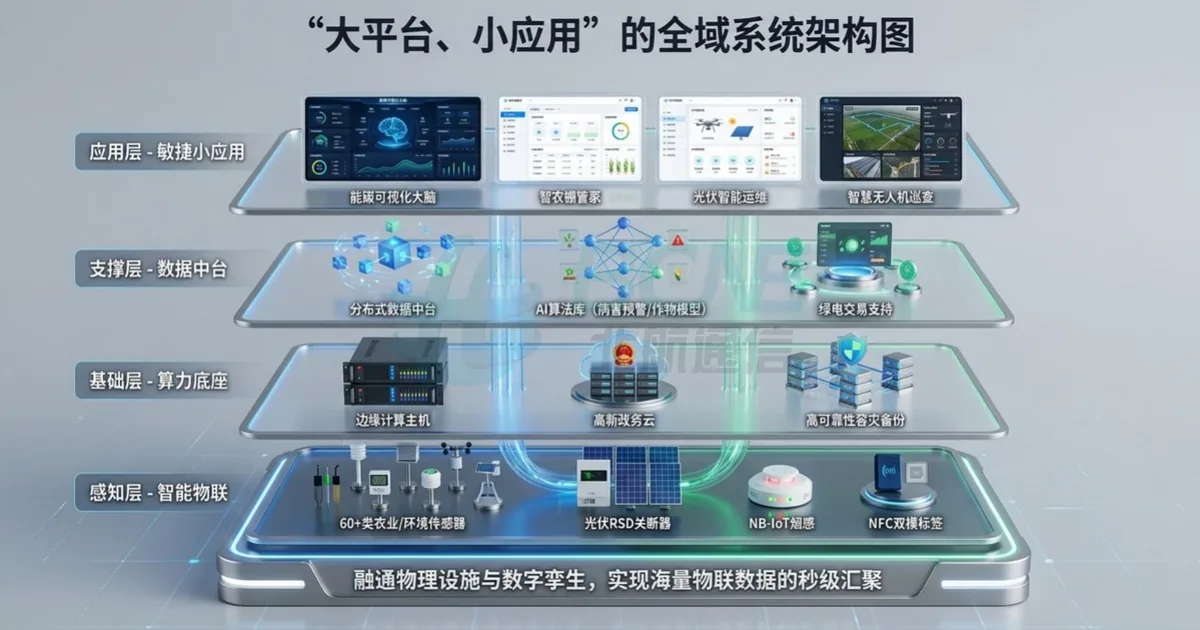
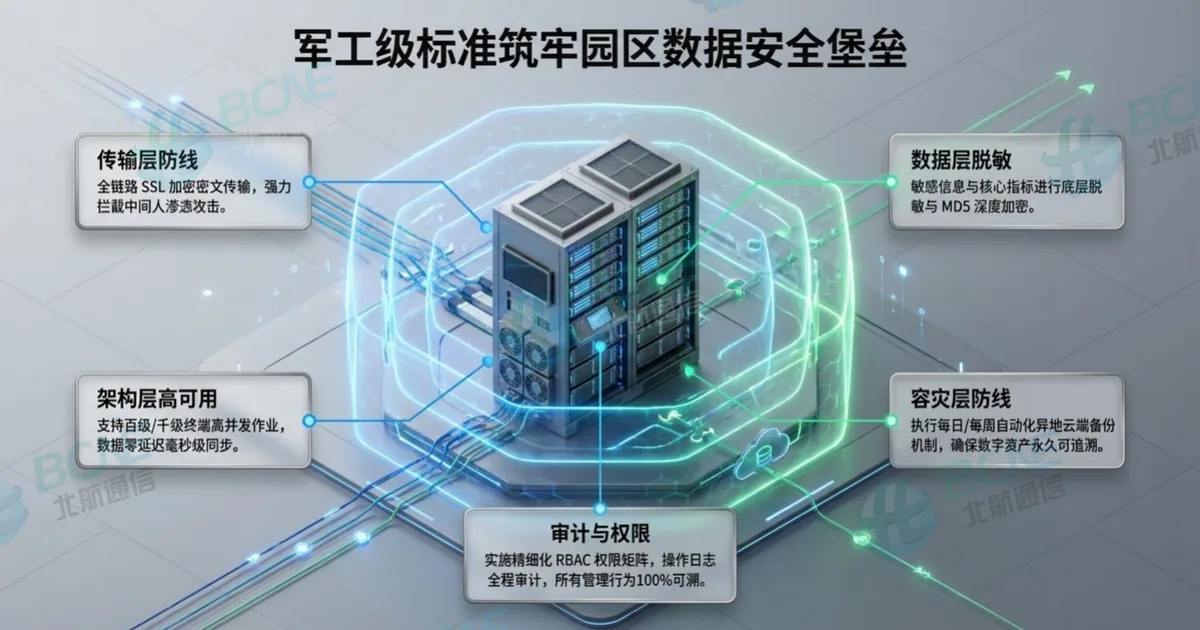
The stack runs from sensing, through compute and a data platform, to applications such as farm management, carbon visualisation, PV operations, and drone patrols. Weak-network sites (basements, fields) use on-device caches and NFC/QR to catch up when the link returns. PV engineering matches the capability brief: simulation, RSD, interconnection, and O&M. Agriculture can sit under the same arrays. Security is described in the brief to a military-grade standard, together with encryption, backup, access control and audit (not a separate licence). The 25-day, four-stage software rhythm assumes a SaaS-style deployment. Private-network, heavy civil, or complex interconnection work sits outside that 25-day rhythm and is scoped separately.
 Illustration
Where It Fits
- Industrial, agricultural, campus, or factory parks that want PV, energy, carbon, and work orders in one place
- Owners of distributed PV who need monitoring, shutdown, and a path to a carbon inventory
- Agri-PV sites that want farming and energy on the same digital front door
- Inspection teams that work offline and later synchronise
Technical Highlights
- Sensing examples: PV RSD devices, 60+ farm/environment sensors, NB-IoT smoke detection, dual-mode NFC tags
- Weak-network method: NFC and QR capture; encrypted local cache and later sync, aimed at reducing missing inspection and energy records (not an absolute “zero loss” promise)
- Energy-and-carbon brain: live use and emissions, composition analysis, peak-valley dispatch, and a direction of travel toward green-certificate accounting; the brief says this can support an ISO 14064 inventory (certification is issued by a qualified third party)
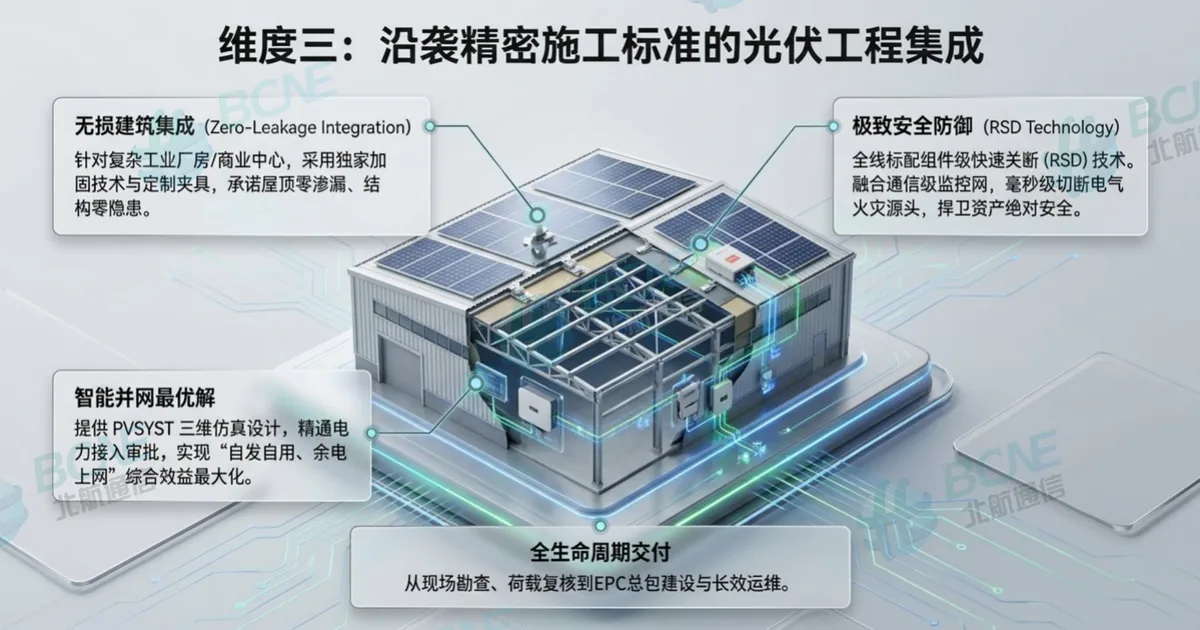
- PV: PVSYST, load checks, self-consumption with export, module-level RSD, EPC and O&M
 Illustration
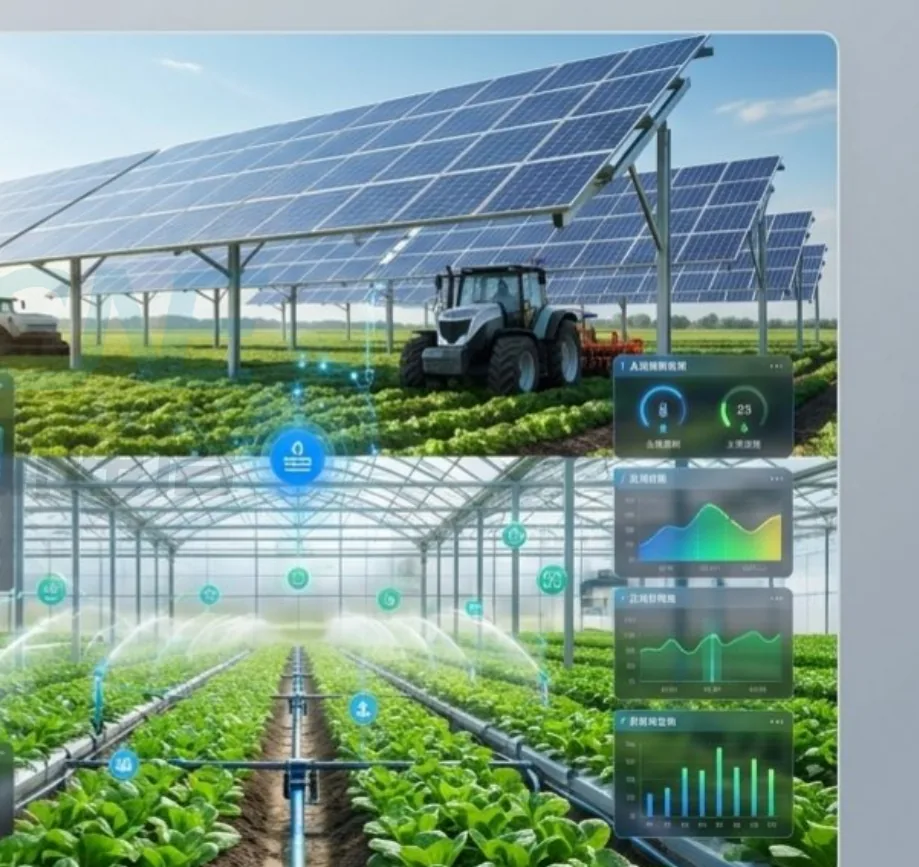
- Agriculture: 60+ sensors, model-based irrigation, lot traceability
- Inspection loop: detect (scan / drone / threshold) → evidence → auto-assign → fix → verify → archive
 Illustration
- Security measures mentioned: SSL, handling of sensitive fields, backups, RBAC, and audit logs
25-day standardised software delivery rhythm in the proposal
- Days 1–2: requirements and a high-fidelity prototype
- Days 3–21: software/hardware integration, tags and sensors, cloud preparation
- Days 22–23: stress tests and checks
- Days 24–25: production deployment and handover
The brief presents this path together with SaaS and reduced on-site server needs. Private-network isolation, grid applications, or major civil work are outside that 25-day sketch.
 Illustration
How We Deliver
- 01ConsultationSite, scale, purpose and budget
- 02Site SurveyEngineers visit and check conditions
- 03Proposal & QuoteA practical plan and a clear quotation
- 04Build / DevelopDelivered to plan with regular progress updates
- 05CommissioningJoint testing, document handover, training
- 06Operation SupportContinued maintenance after handover
FAQ
Are you a carbon-verification body?
No. The brief is about collecting, displaying, and dispatching energy and carbon data, and preparing materials toward ISO 14064. Formal verification is done by a qualified third party.
Is 25 days a guaranteed go-live?
The proposal describes a 25-day standardised software delivery rhythm. Grid applications, civil works, or a private network are estimated separately.
Does this conflict with the private-network greenhouse blueprint?
It can. This brief leans to SaaS and cloud backup; the blueprint leans to physical isolation. Choose a primary architecture, or a reviewed hybrid, at kick-off.
Are the green-power shares on the dashboard from a real park?
They are UI mock-ups, not an audited result.
Can we buy only PV, or only the carbon dashboard?
Modular scopes are possible. The full value is one nervous system for energy, park operations, and, if present, agriculture.
How is data protected?
The brief describes encrypted transport, backups, access control, and audit.
How do we get the architecture pack?
Download the Web PDF, or request the high-resolution file. info@bcne.com.cn, +86-22-58695656.
Download
The web version downloads directly. For the high-resolution version, please leave your name, phone and email first — the download starts right after you submit.
Ask About This Solution
Fields marked * are required. We reply within 1 working day.
✔ We reply to every inquiry within 1 working day.
This page introduces a solution and is not an offer. BCNE is not affiliated with Beihang University.